 |
| 1940 |
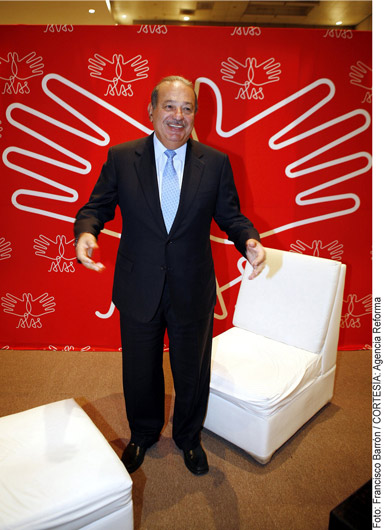
 Carlos Slim is born on January 28, in Mexico City. Carlos Slim is born on January 28, in Mexico City. |
 |
| 1961 |
| He completes his professional studies in civil engineering at the National Autonomous University of Mexico (known by its Spanish acronym UNAM), where he also taught Algebra and Linear Programming; he taught the latter while still studying, meaning he was simultaneously a student and professor. |
 |
| 1965 |
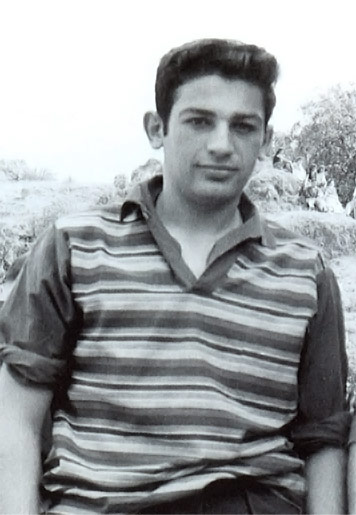
| He incorporates Inversora Bursátil and becomes its chairman of the Board of Directors. By acquiring Jarritos del Sur and incorporating Inmobiliaria Carso, he begins to establish the basis of what later becomes Grupo Carso, whose name combines the first syllables of Carlos and Soumaya. |
 |
| 1966 |
| At the end of this year he marries Soumaya Domit Gemayel. |
 |
| 1967 |
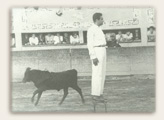
| He founds and heads Promotora del Hogar, S.A., a residential real estate company, and GM Maquinaria, which buys, sells and rents construction equipment. |
 |
| 1968 |
| Acquires and manages Mina el Volcán SSG Inmobiliaria, S.A. |
| 1969 |
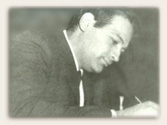
| Three new companies start operations: Bienes Raíces Mexicanos, S.A., Nacional de Arrendamientos, and Invest Mentor Mexicana. |
 |
| 1972 |
| Pedregales del Sur, S.A. starts operations. |
| 1976 |
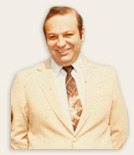
| Acquires 60% of Galas de México, a printer of labels and calendars, and significantly improves its operations. |
 |
| 1980 |
| Grupo Galas, today Grupo Carso, is formed, whose principal activities at the time were industry, construction, mining, retail, food and tobacco. |
| 1982 |
| During the 1982 economic crisis, with the country’s finances almost paralyzed, Carlos Slim continued to invest in companies such as Reynolds Aluminio, Sanborns, General Tire, among others, until 1984. |
| 1984 |
| Acquires Bimex, S.A., Hulera El Centenario Firestone, 40% of British American Tobacco, and 33% of Anderson Clayton. Also buys Seguros de México, today Seguros Inbursa, and creates Grupo Financiero Inbursa by integrating Seguros de México, Fianzas La Guardiana and Casa de Bolsa Inbursa. |
| 1985 |
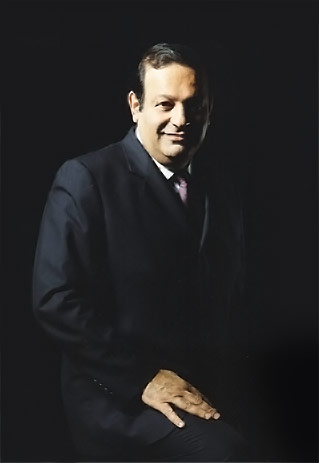
| Joining the Group are Sanborns, Dennys, Fábricas de Papel Loreto y Peña Pobre, Pamosa, 50% of Hershey's and Artes Gráficas Unidas. |
 |
| 1986 |
| Acquires Empresas Nacobre, Minera Frisco and Química Fluor, and increases the Euzkadi stake. Fundación Carlos Slim Helú, A.C. is created, a non-profit philanthropic organization whose objective is to serve Mexican society by contributing to the development and training of human capital through ongoing high-impact and wide-ranging programs. |
| 1990 |
| Grupo Carso goes public with an Initial Public Offering, which is followed by mergers of the Group’s companies and international IPOs. At year-end, the company wins the bid to acquire Telmex jointly with Southwestern Bell and France Telecom, after which Carso Global Telecom, the holding company for Telmex, is created. The brand Telcel is also created, from Radiomóvil Dipsa, S.A. de C.V. |
| 1991 |
| Acquires Hoteles Calinda (today, OSTAR Grupo Hotelero). |
 |
| 1992 |
| Acquires Condumex. |
| 1993 |
| Acquires the majority interest in General Tire and Grupo Aluminio. |
| 1994 |
| Museo Soumaya is established this year with holdings that include more than 64,000 works of art; in addition, the non-profit museum conducts research, conservation and promotion of Mexican and European art through permanent, temporary and traveling exhibitions. |
| 1995 |
| Fundación Telmex is established, one of the most important philanthropic organizations in Latin America, whose vision is to contribute to Mexico through education, health, nutrition, justice, culture, personal development, environmental conservation, sports and disaster relief, generating opportunities that foster the comprehensive development of Mexicans for the betterment of the country. |
| 1996 |
| Grupo Carso is split into three companies: Carso Global Telecom, Grupo Carso and Invercorporación. |
| 1997 |
| Buys Sears Roebuck. In telecommunications, Telmex USA starts to operate. |
| 1999 |
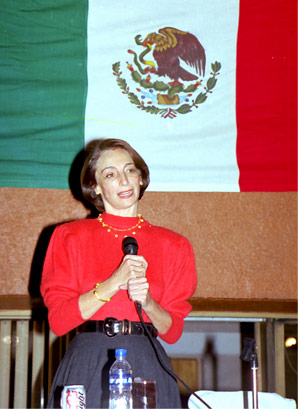
| Buys Pastelería Francesa El Globo. Also acquires an interest in Tracfone, a cellular company in the United States. Carso Infraestructura y Construcción, S. A. (CICSA) is created, a Mexican construction and engineering company and part of Grupo Carso’s infrastructure and construction division. Soumaya Domit de Slim passes away, leaving an invaluable legacy; she always worked for the personal development of Mexicans, with several projects that are still active. These include the Asociación de Superación por México, A.C., the creation of a legal framework for organ donation, and writing a series of handbooks entitled “True Joy is Sadness Overcome”, among many others. |
 |
| 2000 |
| América Telecom, the holding company for América Móvil, is established and acquires an equity stake in the cellular telephone companies ATL and Telecom Americas, in Brazil; Telgua in Guatemala; Conecel in Ecuador; and Techtel in Argentina. Fundación del Centro Histórico de la Ciudad de México is created, with the aim of rescuing and revitalizing Mexico City’s historic downtown area.The chairman of the board of directors of Telmex, Carlos Slim, and the chief executive of Microsoft, Bill Gates, announce the launch of their Spanish portal T1msn (today ProdigyMSN). This strategic alliance would soon become the leading portal in Mexico. |
| 2001 |
| Continues to acquire shares of cellular telephone companies in Brazil, including Tess, Telet, Americel and a larger stake in ATL. |
| 2002 |
| US Commercial begins operations in the United States. Acquires majority share of Comcel in Colombia; of Techtel in Argentina; and increases its equity stake in cellular telephone companies in Brazil. |
| 2003 |
| Continues the expansion of América Móvil’s operations with the acquisition of shares of Celcaribe, which operates in Colombia; BSE and BCP in Brazil; CTE in El Salvador; and CTI in Argentina. |
 |
| 2004 |
| América Móvil’s position in Latin America expands with Entel of Nicaragua; Megatel in Honduras; and most of the stock of CTE in El Salvador. Buys AT&T Latin America with operations in Argentina, Brazil, Chile, Colombia and Peru, and creates Telmex Latinoamérica. Subsequently the company acquires Chilesat, Techtel, Metrored and Embratel. |
| 2005 |
The Chapultepec Agreement is signed, whose full name is the National Agreement for Unity, Rule of Law, Development, Investment and Employment. This document was an invitation to assume shared responsibility for the progress of the country, which was signed by more than 1,200,000 Mexicans interested in the well-being of the country. 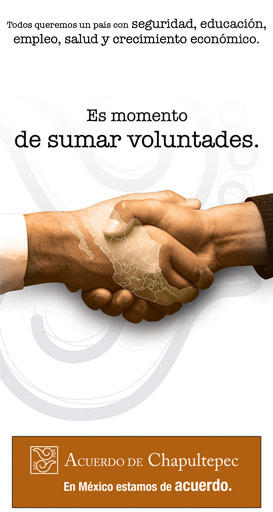
|
 |
| 2007 |
|
|
|
|
| 2008 |
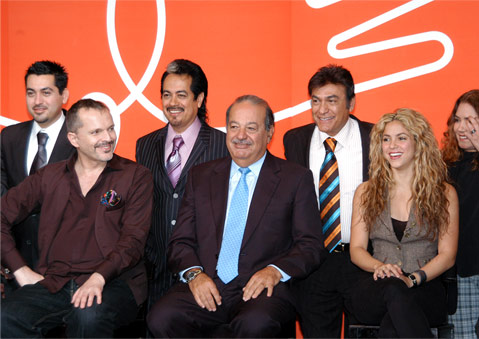
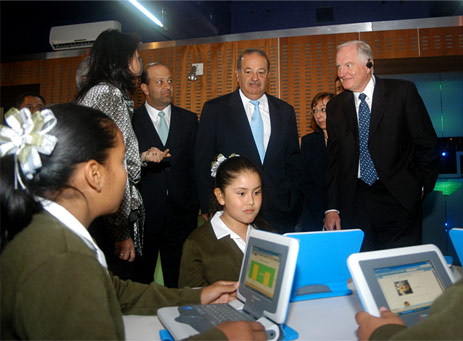
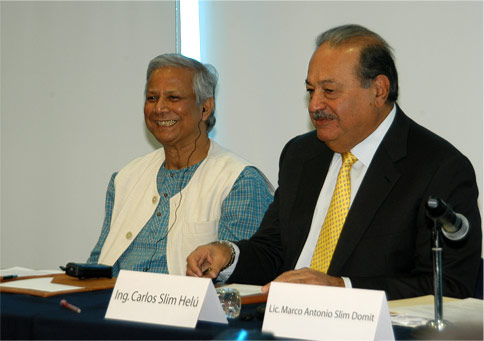
| Carlos Slim Helu reaffirms its commitment to cooperate with the cause of ALAS, with a donation of $110 million to support programs for children. |
 |
|
|
 |
|
|
 |
|
|
 |
|
|
| 2009 |
|
|
| 2010 |
|
|
|
|
| 2011 |
|
|
| 2012 |
|
|
| 2013 |
|
|
| 2014 |
| On January 29, the Carlos Slim Foundation and Coursera sign an agreement to provide free on-line world-class graduate education to millions of Spanish speaking persons.In April, Mr. Carlos Slim opens Telcel-Infinitum Digital Village, the largest digital inclusion event in the world, announcing the launch of the “Training for a Job” platform, which offers on-line courses to learn about different professions.In August, the Carlos Slim Foundation launches the free Internet website “Latino Access”, catering for the Latino community in the United States. The website offers Spanish language education and training for employment, as well as information on health and culture.Mr. Carlos Slim and Antony K. Shriver, founder of Best Buddies International, call upon employers to support the campaign “I’M TO HIRE”, oriented at persons with intellectual and development disabilities.In November, the former President of the United States, Jimmy Carter, and Mr. Carlos Slim, announce their new partnership to promote the eradication of the last remains in the American continent of onchocerciasis, or river blindness. |
| 2015 |
| In 2015, for the eighth consecutive year, the Carlos Slim Health Awards are granted to outstanding personalities for the development of innovative solutions in the health sector in Latin America and the Caribbean.The Carlos Slim Foundation established a partnership with Elizabeth Holmes and her company Theranos to foster the proactive prevention of diabetes and other ailments.In July, Mr. Carlos Slim along with authorities from the Federal Government, the Government of Mexico City and distinguished personalities, inaugurated Telcel-Infinitum Digital Village, the largest digital event in the world, celebrated in 2015 for the third consecutive year in Mexico City’s central square, the Zocalo plaza.The Carlos Slim Foundation signed an agreement with Autism Speaks to offer on-line information and tools in Spanish language for the treatment of autism.On November 30, Inbursa Financial Group turns 50. |
| 2016 |
| In February, the Honduran Government and the Carlos Slim Foundation signed an agreement to cooperate on Job Training programs, Online Education, and Support for Honduran migrants. In June, Mr. Carlos Slim presented the App-prende digital platform, offering free educational, cultural, and job training content through the aprende.org website for teachers, students, parents, and the wider public. |
| 2019 |
| On October 30, 2019, the Carlos III University of Madrid decorated Mr. Carlos Slim Helú with the Medal of Honor. On November 2019, Mr. Carlos Slim Helú received the National Engineering Award 2018 from Mexico’s President Andrés Manuel López Obrador. On November, Mr. Carlos Slim Helú participated in the 30th Civil Engineering Congress of the Civil Engineers College of Mexico, C. A. |
| 2020 |
| The Carso Group and the Carlos Slim Foundation, in a communication issued on March 24, explained actions taken to assist the community to face the sanitary emergency caused by COVID-19. On April 22, it was announced that Mexico City would have 37,183 additional square meters for hospital attention and patient management, sponsored by 16 foundations and companies, in the COVID-19 Temporary Unit.On June 8, supporting the fight against COVID-19, the Carlos Slim, Telmex-Telcel and Inbursa foundations, donated MX$1,000 M, to help people and strengthen medical personnel efforts in over 30 hospitals.On August 12, AstraZeneca announced an agreement signed with the Carlos Slim Foundation to provide the COVID-19 vaccine across Latin America.On October 12, the Carlos Slim Foundation announced an additional donation of MX$90 M, to extend the operation of the COVID-19 Temporary Unit up to December, 2020 |
| 2021 |
| On June 11, the Mexico City Major, Claudia Sheinbaum, unveiled a commemorative plaque recognizing the COVID 19 Temporary Unit at the Citibanamex Center. On October 5, the UNAM and the Carlos Slim Foundation opened the National Biodiversity Pavilion, as a learning and preservation space, hosting collections of the UNAM’s Biology Institute. |
| 2022 |
| On April 1, Her Majesty Queen Sophia of Spain, granted the 'Sophia Award for Excellence' to the Mexican businessman and philanthropist Eng. Carlos Slim.On June 6, the UIT recognized the Carlos Slim Foundation and América Móvil for their health care technology innovations.On January 4, the Carlos Slim Foundation, in collaboration with the Mexico City Government, reported that the capacity of the COVID-19 Temporary Unit had been expanded.Conference by Eng. Carlos Slim Helú in the Telmex Foundation Event: “Mexico 21st Century”.
National Auditorium, Mexico City, September 2, 2022. |
| 2023 |
| On June 30, the Spanish Chamber of Commerce in Mexico, granted the Vasco de Quiroga Award to Carlos Slim, for promoting business opportunities between both countries. |
| Grupo Carso announced, on September 27, the acquisition of 49.9% of Talos Energy by its subsidiary Zamajal. |
| His Majesty King Felipe IV of Spain, presented the “Enrique V. Iglesias Award” to Carlos Slim, for his contribution to the development of Ibero-America. Madrid, Spain, October 25, 2023 |
| Eng. Carlos Slim participated in the 28th Plenary Meeting of the Montevideo Circle Foundation, “The Ethics Rebirth,” held in Asturias, Spain, on October 26 and 27. |
| On October 27, the Carlos Slim and TELMEX Telcel foundations started the distribution of 26 tons of humanitarian aid, after Hurricane Otis. |
| Carlos Slim, together with other businessmen, held a meeting with President Andrés Manuel López Obrador, on November 8, where they committed to rebuild Acapulco after destruction caused by Hurricane Otis. |
| Carso Energy, through its subsidiary Gasoducto Centauro del Norte S. A de C. V., signed, together with the Federal Electricity Commission, an agreement dated October 20 to develop a gas pipeline that will be an expansion of the Samalayuca – Sásabe line. |
| 2024 |
| On January 12, Eng. Carlos Slim Helú delivered a Master Conference to ITAM alumni in Mexico City, framed in the Economic Perspectives Forum 2024. |
| On February 12, Eng. Carlos Slim Helú delivered a press conference in Mexico City, where he addressed, among other topics, the business history of Grupo Carso and Telmex privatización, later enrichening it with a thorough Q&A session. |
| Eng. Carlos Slim Helú took part in the Nearshoring Summit Mexico, Productivity with a Vision for the Future, organized in Mexico City, in February 19. |
| Eng. Carlos Slim Helú, President of Grupo Carso, delivered on July 1, the conference entitled, “Prospective in the efficient application of Mexican engineering to establish investment conditions in our country,” framed within the Engineer’s Day, convened by the Mexican Union of Engineers Associations (Unión Mexicana de Asociaciones de Ingenieros, A. C.) (UMAI). |
| Eng. Carlos Slim Helú received the “Juan Sánchez Navarro” Award, granted by the Business Coordinating Council, recognizing his work for the Development of Mexico, on August 9. |
| The Lebanese Center in Mexico honored Mr. Carlos Slim for his contribution to the development of Mexico, for his support to the Mexican community of Lebanese origin, and for his altruism, last August 22. |
| Mr. Carlos Slim receives the Peace Summit Award for the altruistic and peace-building initiatives he has performed through social supports and programs addressing diverse social sectors in Monterrey, Nuevo Leon, last September 22. |
| The Carlos Slim Foundation and TELMEX informed that they have deployed their humanitarian aid plan for natural disasters, to help Acapulco inhabitants, last October 2. |
|
Engineer Carlos Slim Helú, President-for-Life of Carso Group, received the degree of Doctor Honoris Causa, lasta October 16, granted by the Engineering School of the Anahuac University of Mexico.
|
|
Eng. Carlos Slim Helú received the Italy-Mexico 2024 Prize, last October 18, from the by the Italian Chamber of Commerce
|
|
On December 11, Inbursa Financial Group celebrated 60 years as one of the most solid financial groups in Mexico, with a commemorative event held in the old Pabellón Polanco, in the City of Mexico.
|


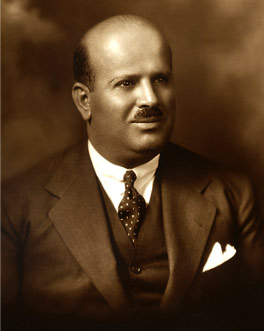
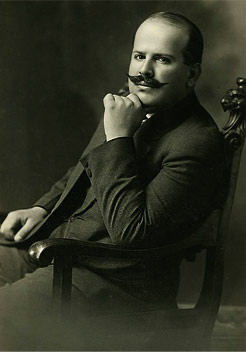
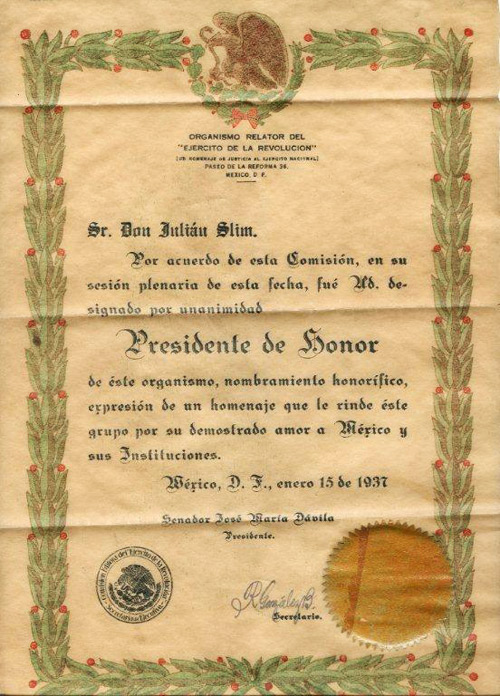
In 1902, Julián Slim Haddad, father of Carlos Slim Helú, arrived in Mexico from Lebanon, all alone and 14 years of age, speaking no Spanish. He was escaping from the yoke of the Ottoman Empire, which at the time conscripted young men into its army; mothers therefore sent their sons to exile before turning fifteen.
And thus Don Julián arrived in Mexico; he was a young man, energetic and full of enthusiasm and ideas, who after disembarking in Veracruz, moved to Tampico, Tamaulipas, where four of his older brothers had already settled since 1898 (José, Elías, Carlos and Pedro Slim) with the conviction that they would succeed together with the country that had received them.
Carlos Slim's mother, Doña Linda Helú, was born in Parral, Chihuahua. She was the daughter of José Helú and Wadiha Atta, Lebanese immigrants who arrived in Mexico at the end of the 19th century, and after traveling through several cities in the Mexican Republic, decided to settle in the capital city. José Helú brought the first Arabic printing press to Mexico and founded one of the first magazines for the Lebanese community in this country.
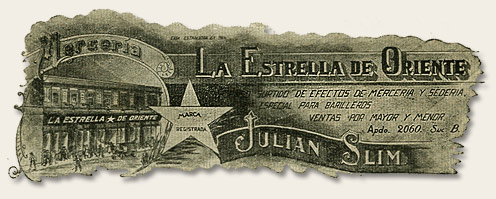
The Slim brothers later moved to Mexico City and in 1911, Julián Slim and his brother José, who was thirteen years older than him, founded the company La Estrella de Oriente (“the Star of the East”), so named in honor of their country of origin. The partnership was formed with 25,800 pesos, each of them contributing 50 percent. In May 1914, in the midst of the Mexican Revolution, Don Julián, then 26 years old, bought his brother’s fifty percent stake for 30,000 pesos.
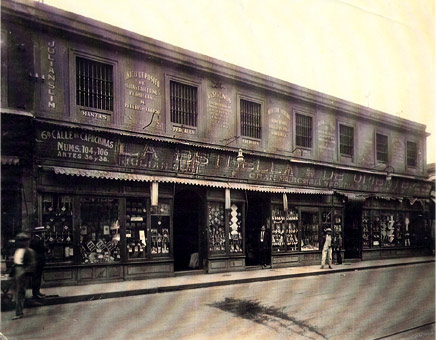
La Estrella de Oriente was an important dry goods store located on Calle de Capuchinas (today Venustiano Carranza); that, over time and with Don Julián’s extraordinary work ethic and business talent, had merchandise worth more than US$100,000 by January 21, 1921, only ten years after the business was founded. By that time, Don Julián had also acquired eleven more properties in the area, which was one of the most commercial, active and significant in downtown Mexico City, and therefore in the country. The current value of the store would be more than US$7 million today, and the real estate would be worth around US$28 million.
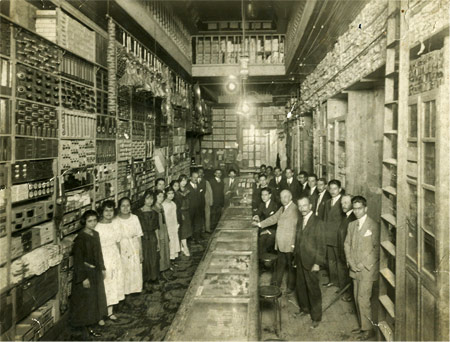
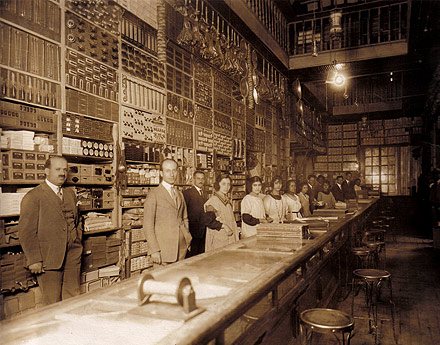
By 1922, Don Julián’s net worth was already $1,012,258 pesos between real estate, businesses and various stocks.
In August 1926, Julián Slim and Linda Helú married in Mexico City. Their first daughter, Nour, was born four years later, and Alma two years after that, followed by Julián, José, Carlos and Linda.

With his intelligence and tenacity for work, Don Julián Slim Haddad would become a prominent businessman and the father of an exemplary family who was able to instill in his children both moral values and the dedication to and familiarity with work.
The reasons for Don Julián Slim Haddad’s commercial success were simple: a calling, talent and hard work. Don Julián’s thinking was ahead of his time, given his deep understanding of business; by the 1920s he was already talking about an efficient business as one that sold large volumes at smaller margins, and with payment facilities, factors that today prevail in the large discount stores.
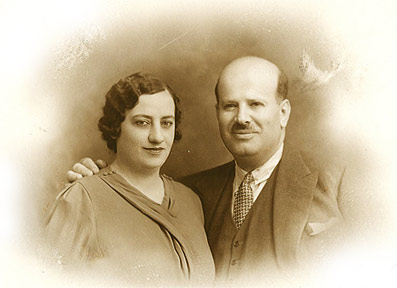
“Lebanese are characterized by their work, their economy, their simplicity, how easily and quickly they learn the language of the countries they go to and in which they live peacefully, especially in places like México that maintain a sacred commitment to personal independence and love of the homeland”.
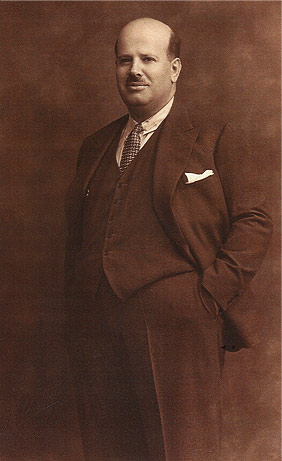
During his leadership of the Chamber, he conducted a census of all Lebanese businessmen in Mexico and actively participated with them in the Nationalist Campaign of the 1930s, whose objective was to promote Mexican industry by buying and consuming made-in-Mexico products, with the aim of benefiting trade, employment and national development. The motto of the campaign was “consume what the country produces.” Although this campaign had the support of the President of the Republic (Pascual Ortiz Rubio) it did not cost the country’s federal treasury a penny because the various chambers of commerce contributed the resources to disseminate and promote it. The campaign always advocated the excellence of Mexican products and for an increase in the country’s exports. Don Julián’s participation was especially active, important and dynamic in this important movement and it proved his extraordinary capacity to assimilate to the culture of a country that he assumed and defended as his own. During that period he requested and finally obtained Mexican nationality.
Carlos Slim Helú was born on January 28, 1940 in Mexico City, where he learned from early on the value of family as a priority in life.
He also received his first business lessons in early childhood, as Don Julián gave each of his children a savings book with their usual weekly allowance in order for them to learn to manage their income and expenses. They reviewed this book with him, analyzing their expenses, purchases and activities, and by following this rule Don Julián’s children managed their finances and developed their own wealth. From that time investment and savings were part of young Carlos’s life, becoming his first lesson in business, which he soon put into practice by opening his first checking account and buying shares of Banco Nacional de México when he was only 12 years old.
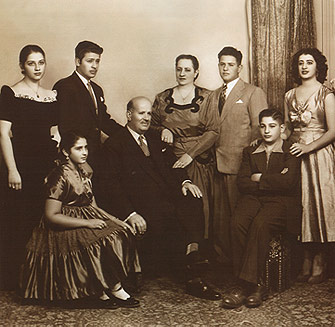
With his parents and five siblings, Carlos Slim Helú grew up in a close, loving family that taught by good example, but in 1953 Don Julián died suddenly, deeply affecting the Slim Helú family; it was a sad and unexpected emotional blow that left a noticeable mark in the home. Carlos was only 13 years old.


Carlos Slim Helú studied Civil Engineering at the National Autonomous University of Mexico (known by its Spanish acronym UNAM) School of Engineering, where he also taught Algebra and Linear Programming while studying for his degree, meaning that he was both a student and professor.
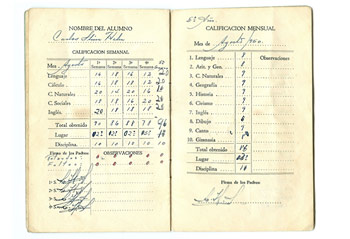
In 1965, when he was only 25 years old, he began to build the foundations of Grupo Carso. Inmobiliaria Carso was incorporated in January 1966, three months before marrying Soumaya Domit Gemayel, hence the name Carso, which is a combination of the first three letters of Carlos and the first two letters of Soumaya.
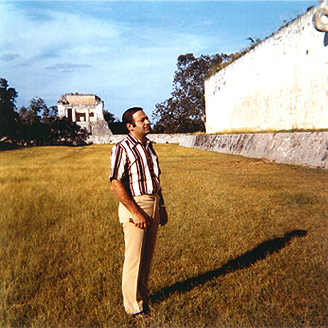
Since the 1980s he has been a noted businessman in various industrial, real estate and commercial fields. In 1982, which was a critical time in the history of Mexico with the debt crisis, nationalization of the banking system and the country’s finances nearly paralyzed, Carlos Slim and his Grupo Carso decided to invest heavily and actively. They made diverse investments and acquisitions during this period, one of which was Cigatam, which turned out to be the first and most important because of its cash flow, providing the Group with sufficient liquidity to capitalize on available opportunities and thereby increase itsacquisitions of big companies, including: Hulera el Centenario, Bimex, Hoteles Calinda (today, OSTAR Grupo Hotelero) and Reynolds Aluminio. Some time later the purchase of Seguros de México was closed, and Grupo Financiero Inbursa was formed by integrating Casa de Bolsa Inversora Bursátil, Seguros de México and Fianzas La Guardiana. By 1985, Grupo Carso acquired control of Artes Gráficas Unidas, Fábricas de Papel Loreto y Peña Pobre, and also a majority stake in Sanborns and its affiliate Dennys. In 1986 Minera FRISCO and Empresas Nacobre were acquired, as well as their affiliates, and control of the Euzkadi tire company, the market leader at the time, was also acquired, as was a majority stake in General Tire some years later.

In 1990, in partnership with Southwestern Bell and France Telecom, it acquired TELMEX, marking the beginning of a new era characterized by significant investment in telecommunications infrastructure. This modernization led the company to a global strategic transformation.
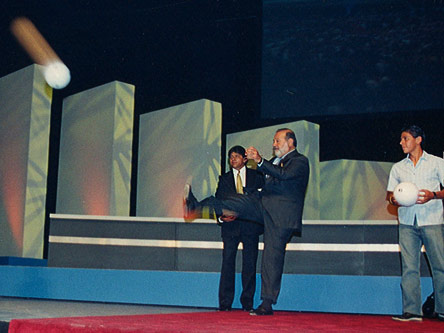
In 1996, with América Móvil, it pioneered the global introduction of the prepaid mobile phone system, opening the door to mobile telephony for more people and allowing it to achieve market leadership. Today, it has established itself as one of the most important integrated telecommunications services companies globally. It operates in 23 countries in the Americas and Europe, offering telephone, internet, and pay-TV services through a world-class network.
Carlos Slim has left most of the boards of his companies, and currently serves as: Chairman of the Board of Directors of Impulsora del Desarrollo y el Empleo en América Latina, S.A. de C.V. (IDEAL); Chairman of Fundación Telmex, A.C.; Chairman of Fundación Carlos Slim Helú, A.C.; Chairman of the Executive Committee of Consejo Consultivo de Restauración del Centro Histórico; and Chairman of Fundación del Centro Histórico, A.C.
Mr. Slim continues to be active in business although his main effort and work is focused on education, health and employment in Mexico and Latin America, through the foundations he chairs and companies in infrastructure arena; his three sons, Carlos, Marco Antonio and Patrick Slim Domit, have taken over the reins of his businesses.
Mr. Slim has lectured at public and private institutions as well as at international organizations such as the Economic Commission for Latin America (ECLA).
He was a member of the Board of Directors of Altria (previously Philip Morris Companies), and also a Board Member for SBC Communications, Inc., from which he retired in 2004 to devote more of his time to the IDEAL project, Impulsora para el Desarrollo y el Empleo en América Latina, with a particular emphasis on infrastructure, health and education.
He has also served as Vice Chairman of the Mexican Stock Exchange and Chairman of the Mexican Association of Brokerage Firms. He was the first Chairman of the Latin American Committee of the Board of Directors of the New York Stock Exchange.
Carlos Slim Helú and his wife Soumaya Domit de Slim (deceased) had six children: Carlos, Marco Antonio, Patrick, Soumaya, Vanessa and Johanna.
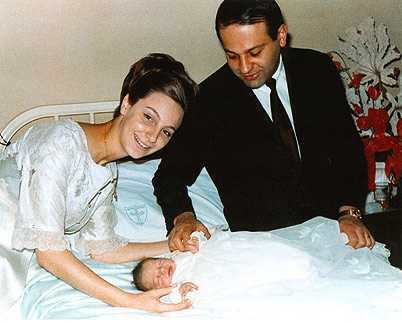
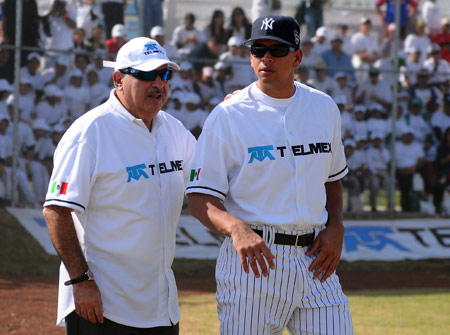
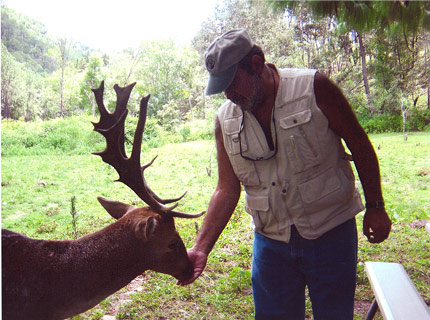
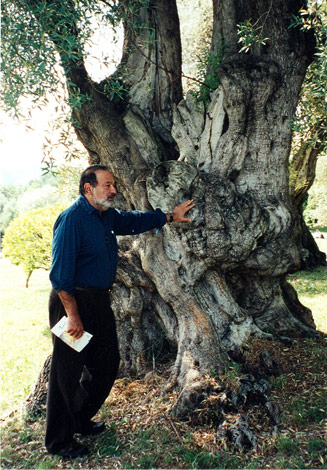
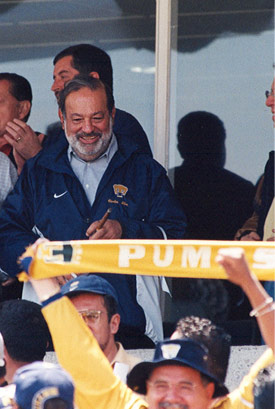
Mr. Slim has a passion for history, art and nature; he is also a great fan of baseball and has written several articles about the sport.
On December 16th, 2008, Engineer Carlos Slim Helu was nominated member of Research and Development Corporation Executive Board, a nonprofit research organization in the United States which offers assessment and solutions about commerce and politics, among other aspects, throughout the world.
At the time Eng. Slim was elected member of the executive board, the President and Executive Director of RAND Corporation, James A. Thomson expressed: “It is an honor to include in the executive board of RAND organization this distinguished business and philanthropist leader” and added: “Undoubtedly, Carlos Slim Helu will help the corporation to improve its 60 years of success by providing objective analysis and effective solutions related to the new challenges that the private and public sectors are facing around the world”.
ITU and UNESCO announce on May 10, in Genéve, Switzerland, the creation of top-level global Broadband Commission for Digital Development and it is co-chaired by Mr. Carlos Slim.
With high-impact social programs, focusing on the most vulnerable population, in 2011, Carlos Slim Foundation has directly benefited more than 29.7 million people.

Carlos Slim Helú has received significant recognition and has been honored with the following, among others:
-
Eng. Carlos Slim Helú received the Italy-Mexico 2024 Prize, from the by the Italian Chamber of Commerce. Mexico City, October 18, 2024. Continúa...
-
Engineer Carlos Slim Helú, President-for-Life of Carso Group, received the degree of Doctor Honoris Causa granted by the Engineering School of the Anahuac University of Mexico. Mexico City, October 16, 2024.Continúa...
- Mr. Carlos Slim receives the Peace Summit Award for the altruistic and peace-building initiatives he has performed through social supports and programs addressing diverse social sectors. Monterrey, Nuevo Leon, September 22, 2024.Continue...
- The Lebanese Center in Mexico honored Mr. Carlos Slim for his contribution to the development of Mexico, for his support to the Mexican community of Lebanese origin, and for his altruism. Mexico City, August 22nd, 2024Continue...
- Eng. Carlos Slim Helú received the “Juan Sánchez Navarro Award”, granted by the Mexican Business Coordinating Council, for His Work in Favor of the Development of Mexico. Mexico City, August 9, 2024. Continue...
- His Majesty King Felipe IV of Spain, presented the “Enrique V. Iglesias Award” to Carlos Slim, for his contribution to the development of Ibero-America. Madrid, Spain, October 25, 2023 Continue...
- Her Majesty Queen Sofía presided over the Sophia Awards for Excellence award ceremony, presented by the Queen Sofia Spanish Institute of New York to Spanish historian Carmen Iglesias, Mexican businessman and philanthropist Carlos Slim and Spanish chef José Andrés, who was unable to attend the gala in person as he was in Ukraine. April 1, 2022, Nueva York, NY. Continue...
- Mr. Carlos Slim was recognized at the 4th Edition of the Ibero-American Patron of the Arts Awards, organized by the Callia Foundation, for his social commitment to the arts. 26 February 2018. Madrid, Spain. Continue...
- Carlos Slim Helú receives Humanitarian Award from Andrea Bocelli Foundation. September 8, 2017. Rome, Italy. Continue...
- The Appeal of Conscience Foundation granted Mr. Carlos Slim the Appeal of Conscience Award. 19 September 2016. New York, USA. Continue...
- Dr. Mercedes Juan, Mexico’s Secretary of Health, presented an award to the Carlos Slim Foundation recognizing its commitment and achievements in organ and tissue donation and transplants. Mexico City, October 2, 2015. Continue...
- For third consecutive year, the Corporate Business Reputation Monitor (Merco), recognizes Mr. Carlos Slim as Mexico’s business leader with the best reputation in 2015. August 4, 2015. Mexico City. Continue...
- Carlos Slim Foundation receives the International Recognition Award 2015 for its contributions to improve global health March 10, 2015. Houston, Texas, U.S.A. Continue...
- Mr. Carlos Slim receives the UNESCO Medal recognizing his contribution to make sure that Information and Communication Technologies benefit the population. February 27, 2015. Paris, France. Continue...
- Forbes Magazine ranks Carlos Slim Foundation as Mexico's most charitable business foundation. January 22, 2015. Continue...
- Mr. Carlos Slim was bestowed the Friars Club's Icon Award by the Friars Club of New York, the acknowledgment was given in the Friars Foundation Gala and it was conferred to Mr. Slim due to his philantropic and humanitarian endeavors. October 7, 2014. New York City. Continue...
- Mr. Carlos Slim received the Starlite Humanitarian Award 2014, in recognition of his philanthropic work, during the 5th edition of the Starlite Gala organized to support foundations and social organizations. August 9, 2014. Marbella, Spain. Continue...
- Mr. Carlos Slim Helú is recognized as Mexico’s businessman with the best reputation. The distinction is awarded by the Corporate Reputation Business Monitor (Merco) 2014. Mexico City, May 29, 2014. Continue...
- The International Telecommunications Union granted Mr. Carlos Slim the World Telecommunication and Information Society Award 2014, in recognition to his leadership and dedication in fostering ICT and broadband connectivity for sustainable development. May 16, 2014. Geneva, Switzerland. Continue...
- “Digital education and jobs creation are essential factors that demand our efforts as both society and country”, Mr. Carlos Slim said in a ceremony of his 50th anniversary as an engineering graduate by the Universidad Nacional Autónoma de México (UNAM), organized by engineers and architects associations. May 28, 2013. Palacio de Minería, Ciudad de México. Continue...
- Mr. Carlos Slim Helú receives Medal of Honour from ISSF President Olegario Vazquez Raña. Acapulco, México. March 20, 2013. Continue...
- The Business Council for International Understanding To Honor Carlos Slim Helú With 2012 Dwight D. Eisenhower Global Leadership Award. December 12, 2012. New York City. Continue...
- Mr. Carlos Slim received the Gibran National Committee Award for his contribution to spreading the knowledge of the poet, philosopher and painter Gibran Khalil Gibran. Beirut, Lebanon, September 27, 2012. Continue...
- Carlos Slim was awarded for his Leadership in Philanthropy by President Bill Clinton, at the Sixth Annual Clinton Global Citizen Awards. September 24, 2012. Nueva York, NY. Continue...
- Mr. Carlos Slim was named Honorific Grade Doctor by George Washington University because of his philanthropic work and his contribution to business and community development in Mexico and Latin America. May 20, 2012. Washington, DC, USA. Continue...
- José Pagés Llergo Foundation did award Mr. Carlos Slim the “Paz y Democracia” Prize in Investment and Development category. April 18, 2012. Continue...
- Mr. Carlos Slim Helú was awarded Red Cross Badge of Honor and Merit due to his long-standing humanitarian trajectory. The medal was imposed to him by Mr. Daniel Goñi Díaz, president of Mexico's Red Cross, and Taderatu Konoe, president of Red Cross International Federation and Red Crescent Societies. February 21, 2012. Mexico City. Continue...
- The Franco-Mexican Chamber of Commerce and Industry awarded Mr. Carlos Slim the Franco-Mexican Friendship Prize 2011, in recognition to his strong relationships to France through his entrepreneurial, industrial, social, commercial and cultural activities. November 10, 2011.
- Mr. Carlos Slim was awarded the prize Quién 50, aimed to honoring the most influential persons in Mexico’s public opinion. That prize is annually bestowed by Quién magazine to persons whose influence and talent have produced helpful changes, growth, and improved surroundings in their own fields and Mexico as well. November 8, 2011, Mexico City
- Claustro de Sor Juana University awarded Mr. Carlos Slim the “Sor Juana Inés de la Cruz” Medal due to his effort to revive Mexico City’s Historic Center. September 29, 2011, Mexico City. Continue...
- The World Boxing Council did award Mr. Carlos Slim the WBC Humanitarian Prize of the Year by his support to the boxing world. November 2, 2010. Cancún, Quintana Roo, Mexico. Continue...
- The President of Lebanon, Mr. Michel Sleiman, did honor Mr. Carlos Slim by awarding him the Lebanese Gold Order to Merit, while the Jezzine Municipal Government did name him Honorific Citizen. Beirut, Lebanon, March 12, 2010. Continue...
- The George Washington University President's Medal, the most distinguished academic award, in recognition of his philanthropic and entrepreneurial management. June 30, 2009, Washington, D.C., U.S.A. Continue…
- Mr. Carlos Slim Helu received the ESADE award in recognition of his philanthropic and entrepreneurial management, during the XIV Annual Celebration ESADE Alumni, Barcelona. June 8, 2009. Barcelona, Spain. Continue…
- Eng. Carlos Slim Helu conferred Man of the Year 2008 by the World Boxing Council (WBC). March 3, 2009. Mexico City. Continue…
- The National Order of the Cedar in Grade of Grand Officer was awarded by the Embassy of Lebanon in Mexico, on November, 2008. Continue…
- Recognition to Carlos Slim Helú to be the Mexican industralist who more resources has destined in life to philanthropic causes, granted by the Mexican Association of Professionals in Power of attorney of Bottoms Chapter Mexico City, in November of 2007.
- Industralist of Year 2007, granted by the Mexican Foundation for the Health (Funsalud).
- National Award to the Excellence Jaime Torres Bodet 2007, granted by the University Center Sun Group.
- Life Achievement Award, by the World-wide Association of Mexican abroad (AMME), in June of 2006.
- Salon del Empresario Award, Mexico 2005. Continue...
- Fashion Group International Prize by his work in the rescue of the Historical Center of Mexico City in 2004.
- Real estate Developers Association Award 2004.
- Industralist of the Decade (Latin Trade 2004).
- Hadrian Award - N.York (2004), granted by World Monuments Fund.
- Alliance Award 2004 - granted by Free Trade Alliance.
- Industralist of the year (Latin Trade 2003).
- World Education and Development Fund (2004) - N. York.
- Decoration of the Commander Leopold II, by the Belgium Government. 2002.
- Golden Plate Award, granted by the American Academy of Achievement. 1994.
- Medal of Honor to Merit Business of the National Chamber of Commerce in Mexico City, 1985. Continue...
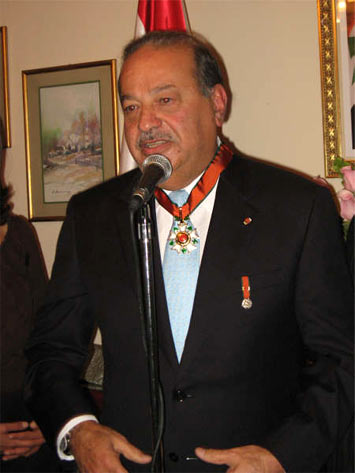
Embassy of Lebanon in Mexico
awarded him the National Order of the Cedar
in Grade of Grand Officer.